
- Military Helicopter Urban Training in Downtown Flint, Michigan
- S. Korea to keep tabs on cellphones to stop killer MERS virus spreading
- Boston grocery store tackles food waste and high produce prices in one fell swoop
- NY housing authority employees to wear orange vests – so they don’t get shot
- NSA surveillance reforms: Are telecom companies ready?
- Social Security shelled out $17 bn in overpayments for disability benefits
- Californians opting for ‘gray water’ recycling amid drought
- 2 gunmen rob NYC man of $1,100 worth of bitcoins
- Police car swallowed up by massive sinkhole in Colorado
- NY food banks seek $16 million in state funding to restock their barren shelves
- 10 Things You Were Successfully Distracted From While Obsessing About Bruce Jenner
|
Posted: 06 Jun 2015 10:31 PM PDT
Last night while walking in downtown Flint, MI by Churchill’s Food and Spirits, a Blackhawk helicopter flew overhead, barely above the peaks of the buildings. We noticed an ABC12 news van parked across the street and decided to see if they knew what was going on. Not long after crossing the street and talking with them the following events of this video took place. Two Blackhawk helicopters hovered over the roof of the building across the street and soldiers rappelled into the top story windows. After a few moments, a multitude of gunshots and small explosions appeared in several windows. Afterwards, the Blackhawks returned to the rooftop and retrieved the soldiers, flying over the large crowd that had gathered. After talking with the camera crew we discovered that this was all a part of a military urban training exercise, in conjunction with other exercises already executed in another part of the city. The exercise lasted about 45 minutes so we apologize for some of the choppy transitions as this was a bunch of shorter videos merged together.
The post Military Helicopter Urban Training in Downtown Flint, Michigan appeared first on USAHM Conspiracy News.       |
|
Posted: 06 Jun 2015 05:10 PM PDT
 After a fifth person died of the Middle East Respiratory Syndrome (MERS) in South Korea authorities warned they will be tracking the cell phone signals of hundreds of people under quarantine to halt the spread of the disease. Acting Prime Minister Choi Kyung-hwan said the government will step up its monitoring of undiagnosed patients, currently quarantined at home, for fear they might have contracted the deadly virus too. It includes tracking their whereabouts through cell phone signals. “Please understand this is an unavoidable measure for the sake of our neighbors and families,” Deputy Prime Minister Choi Kyung-hwan told a news briefing in the central city of Sejong, Reuters reports. Over 2,300 people are currently under quarantine, either in health care facilities or at their homes, including an entire village of 105 people in the southwest after a resident who visited a hospital where the country’s first patient with MERS was treated turned out to be infected. Health experts say the virus, which has no vaccine, spreads through close contact with infected people, and not through the air. MERS, a respiratory disease that can lead to kidney failure and pneumonia, was first was first identified in 2012 in Saudi Arabia. Up to four out of every 10 MERS sufferers have died. Severe damage is caused to those with weakened immune systems – the elderly and those with chronic diseases such as diabetes and cancer. As many as 64 people in South Korea have been infected by the killer virus since last month in the largest outbreak outside the Middle East. According to the European Center for Disease Prevention and Control, South Korea has the highest number of confirmed MERS cases, after Saudi Arabia, United Arab Emirates and Jordan. More than 1,200 South Korean schools were closed at the end of last week, according to the Education Ministry. On Sunday, education authorities in Seoul and the neighboring Gyeonggi Province ordered more schools in their regions to close for the time being, AP reported. But officials say there’s still “a chance at putting the outbreak under total control.” “So far, all the MERS cases have been hospital-associated, and there has been no case of an infection in other social settings,” Choi told a news conference on Sunday. Read More Here The post S. Korea to keep tabs on cellphones to stop killer MERS virus spreading appeared first on USAHM Conspiracy News.    |
|
Posted: 06 Jun 2015 05:06 PM PDT
 In an attempt to kill two birds with one stone fruit, a former grocery store chain president has opened a new, nonprofit store in Boston, Massachusetts that hopes to tackle both food waste and the unaffordability of healthy food among the working poor. Daily Table, a not-for-profit grocery store, opened Thursday in Dorchester, a working-class neighborhood in Boston, featuring cheap, yet healthy foods that traditional grocers are unwilling to sell because of arbitrary ‘use by’ dates. The store is the brainchild of Doug Rauch, the former president of Trader Joe’s, after seeing tons of perfectly good food tossed out because the items were close to or had surpassed their listed sell-by dates. Daily Table’s food stock is mostly donated by food wholesalers and markets after it didn’t sell or was surplus, NPR reported. Other items are acquired through the Greater Boston Food Bank, and the store is one of that agency’s approved organizations, according to the Boston Globe. The food is sold at cost or for a slight mark-up, though customers should expect prices to fluctuate daily based on availability and donations. “As you can see right here we’ve got a pile of bananas at 29 cents a pound,” Rauch told WBUR. “They’re Chiquita bananas, there’s no little black spots on them. Those probably have another three or four days before you start to go, ‘Oh, banana bread!’” Americans trash 133 billion lbs (60 billion kg) of food ‒ mostly meat (including poultry and fish), vegetables and dairy products ‒ each year, according to a February 2014 report by the US Department of Agriculture (USDA). About 10 percent of that comes from retail food waste, either by grocery stores or restaurants. “If just 15 percent less food was wasted, America could actually cut hunger in half,” Ben Simon of the Food Recovery Network told RT’s Alexey Yaroshevsky in February. Yet, according to Feeding America, a national nonprofit network of food banks, 49 million people in the US ‒ or one in six Americans ‒ live in “food insecure” households, and processed meals and fast food are often much cheaper than fresh produce and other nutritious items. “We’re trying to reach a segment of the population that is hard to reach. It’s the working poor who are out buying food, but who can’t afford the food they should be eating,” Rauch told the Boston Globe in May. “Our job at Daily Table is to provide healthy meals that are no more expensive than what people are already buying.” Along with fresh produce, meat and dairy, the store sells healthy ready-to-cook meals and hot grab-and-go items designed to compete with fast food chains, “making it easier for families to eat healthier within their means,” Daily Table says on its website. “And all the food in our store meets guidelines set for us by a leading group of nutrition experts, which makes it easy for our customers to make great food choices.” It took two years from the time Rauch announced his plans to open Daily Table for the store to come to fruition. He had to fight critics who said he was foisting “old” food rejected by the rich onto the poor, he told WBUR. “It’s been a long time coming,” he said. Rauch notes that sell-by dates are not related to when food will spoil, but rather are tools for retailers and manufacturers to track and rotate products, he told the Boston Globe. The store is membership-based, with shoppers needing to provide their ZIP codes to join. The intention is for the store to serve the surrounding neighborhood, which has historically been a food desert without access to many grocers. Read More Here The post Boston grocery store tackles food waste and high produce prices in one fell swoop appeared first on USAHM Conspiracy News.    |
|
Posted: 06 Jun 2015 05:02 PM PDT
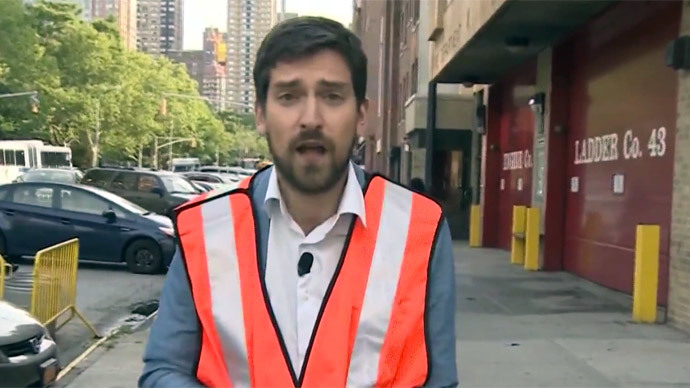 The New York Housing Authority is so worried about their workers being targeted by the police that they want them to wear bright orange vests. They say it will make them more visible, but others say it’s to stop them being shot by “trigger-happy” cops. The move comes after a law enforcement officer fatally shot a maintenance crew worker, who was going about his everyday job. The man, father of two Akai Gurley, was unarmed and was in a poorly lit stairwell of a Brooklyn housing complex when he accidentally startled police officer Peter Liang, who opened fire by mistake. “[The elevator workers] were basically told the reason was because of recent incidents where cops had pulled a gun on a caretaker and a supervisor on the roof of a housing project,” a source told the New York Post. However, RT America’s Aleksey Yaroshevsky was given a different version by the New York City Housing Authority (NYCHA). He was told that the move was part of the Safety in Motion initiative and was not related to any incidents involving the city’s cops. He also said workers will be required to wear their official identification around their necks so workers don’t need to reach into their back pockets for identification. This has not gone down well with all the employees who like to keep their IDs out of public view, so that drug dealers and gang members do not know their names. The safety drive was announced in late May and could affect over 10,000 workers who help to maintain around 2,500 buildings in the city. New York is the largest public housing authority in the US and provides homes for over 600,000 residents. Gregory Floyd, who is the president of a union which represents 8,000 Housing Authority workers, a third of whom are also NYCHA residents, said poorly lit areas in housing complexes are a problem. However, requests to add extra lighting is often ignored at both a local and federal level. Read More Here The post NY housing authority employees to wear orange vests – so they don’t get shot appeared first on USAHM Conspiracy News.    |
|
Posted: 05 Jun 2015 06:22 PM PDT
 The USA Freedom Act, signed this week, has curbed the NSA’s mass surveillance powers. Now the phone companies are responsible for the mass collection of metadata, creating new obstacles for the telecom industry. Under the new legislation, the NSA will be prohibited from collecting telephone metadata. Instead, the agency will have to acquire a warrant every time it wants to access phone records, which telephone companies are now legally required to hold. NSA official would have to submit data requests via keywords in order to collect relevant data from telecom companies. The law would also reform the Foreign Intelligence Surveillance Court (FISA) by setting up a five-person panel that would offer advice when intelligence agencies seek new interpretations of existing law. Some of their court rulings would need to be declassified. Currently telecom companies are required under FCC regulation to store telecom data for 18 months, although there are exceptions, such as T-Mobile, who holds its metadata for 7-10 years. The Wall Street Journal reported under the new law US telecom companies will have the next six months to negotiate with the government how they are going to store phone and internet data and for how long. The companies also to figure out how to make the metadata – number called, time of call, and duration of call – available for access by the NSA with a warrant from the Foreign Intelligence Surveillance Court. The USA Freedom Act doesn’t stipulate for how long the data should be kept, and it might mean that telecom companies will be paying for collection infrastructure and hiring more lawyers to protect themselves from potential lawsuits. Jot Carpenter, Vice President of Government Affairs for CTIA-The Wireless Association, a group that represents cell-phone companies, told Foreign Policy that providers were reluctant to do any additional collection on behalf of the NSA when the reforms were first suggested, since moving the responsibility of data collection is estimated to cost $60 million. Telecom companies will be now be required to provide a so-called “two-hop function”; the metadata for the targeted individual, every number called by that person, and then every number in contact with the number in question. “Now the phone companies will be the place where the analysis of who’s in contact with whom is taking place,” Jennifer Granick, Director of Civil Liberties at Stanford University’s Center for Internet and Society, told National Public Radio. The bill doesn’t specify whether the phone companies may have to develop their own system for retrieving the data or that the NSA would create a workable software system for them. NPR asked cell phone companies if they plan to regularly disclose NSA requests for metadata or if they plan to change what data they store. CREDO Mobile was one of the few companies that responded. It uses the Sprint network to serve its customers and is known for taking a politically progressive stance on issues. “We don’t know how they plan to implement this going forward under USA Freedom” Becky Bond, Vice President of CREDO told NPR. But she said that phone carriers will take the act’s passage as a wakeup call to “step up and do everything within their legal rights to protect the privacy of their customers who so clearly demanded it in this fight.” Source The post NSA surveillance reforms: Are telecom companies ready? appeared first on USAHM Conspiracy News.    |
|
Posted: 05 Jun 2015 05:14 PM PDT
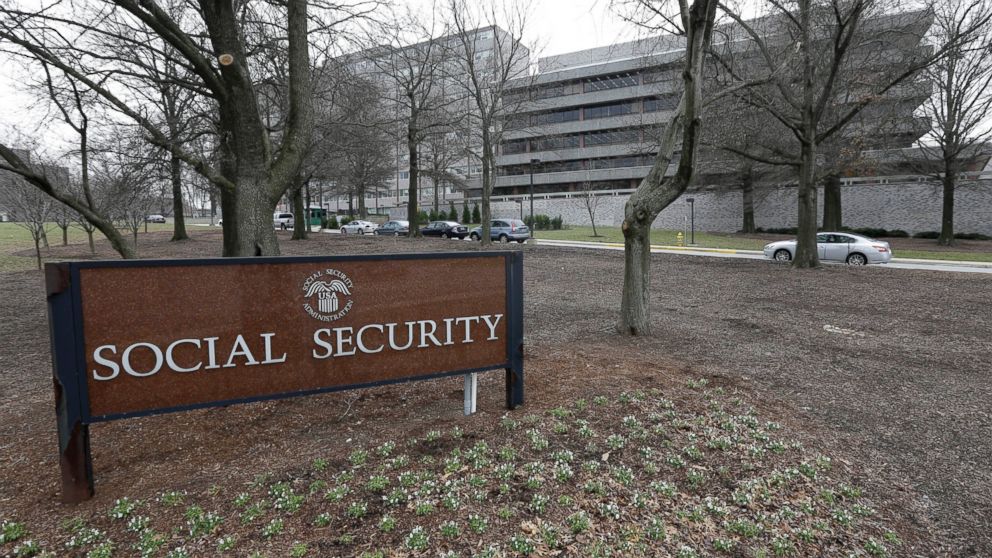 Social Security’s own watchdog found waste, fraud and abuse in its disability program, citing cases where benefits had been paid to disqualified, imprisoned and deceased people. Over 15 million disabled Americans rely on the soon-to-be-insolvent program. A 10-year study by the Social Security Administration Inspector General’s office found $17 billion in overpayments of disability benefits. Recipients were found to include people who earned too much to qualify for the program or were no longer disabled, as well as those deceased or in prison. Nearly half of the 9 million who received disability payments had been overpaid. The agency attempted to recoup about $8.1 billion, but it took years for the money to be returned, according to the study. A spokesman for the Social Security Administration said the agency has high accuracy rates for payments and a comprehensive debt collection program for overpayments, according to the Associated Press. “Social Security provides services to over 48 million retirement and survivors beneficiaries and about 15 million disability beneficiaries,” Social Security spokesman Mark Hinkle said in an email to AP. “The agency will issue nearly $1 trillion in payments this year. For fiscal year 2013 — the last year for which we have complete data — approximately 99.8 percent of all Social Security payments were free of overpayment, and nearly 99.9 percent were free of underpayment.” The study used a sample of over 1,500 randomly selected people receiving either Social Security disability or Supplemental Security Income (a separate program for the poor) in October 2002, and tracked the group for 10 years until February 2014. It found 45 percent of the beneficiaries were overpaid at some point during the period for a total amount of $2.9 million and estimates that Social Security made a total of $16.8 million overpayments during the 10-year period. Disability benefits amounted to about $14,000 a year or $1,165 a month. The study said “the agency could do more to prevent the most common overpayments.” In one instance a man continued to receive disability benefits under his father’s Social Security number while he was working and hiding his income. The man was convicted of fraud in 2005, and ordered by the judge to repay nearly $18,000. So far the agency has received $550. The trust fund that supports Social Security’s disability program is projected to run out of money in late 2016, triggering automatic benefit cuts of 19 percent, unless Congress acts. Read More Here The post Social Security shelled out $17 bn in overpayments for disability benefits appeared first on USAHM Conspiracy News.    |
|
Posted: 05 Jun 2015 05:08 PM PDT
 As California’s four-year drought persists, residents are increasingly turning to water recycling systems that allow for reuse of so-called “gray water” from bathroom sinks, bathtubs, showers and washing machines. Interest in gray-water systems shot up immediately after California Governor Jerry Brown announced on April 1 a mandatory 25-percent reduction in water use by cities and towns in the state, AP reported. “There’s huge interest,” Laura Allen, a co-founder of Greywater Action, a proponent of household water recycling, told AP. Contractors “told us they’re getting so many more calls than before,” she added. The state has in recent years modified its plumbing codes and laws on the use of gray water, or non-potable runoff from household water sources that do not include pathogenic “black water” from toilets, which must be sent to wastewater treatment plants. Californians are now allowed to install safe gray-water systems without a permit. The systems can irrigate with untreated water from bathroom sinks, washing machines and showers, but only if the water runs underground beneath soil or mulch. The untreated water must not come into direct contact with people or food. For example, untreated gray water could be used on tomato plants but not to root vegetables. Some systems treat gray water for wider use. Water Recycling Systems of Redondo Beach, California says its process “filters and disinfects that water so it can be safely re-used for landscape irrigation and other permitted uses.” California Building Industry Association executive Robert Raymer told AP there are numerous companies that are promoting in-home water recycling services. But not all approaches are the same. “Just like there’s no one sure way to fight the drought, there’s no one sure way for gray-water treatment,” he said. “Everybody has to look at all the options and figure out what works for them.” Residents of about 20 states are allowed to use gray-water recycling systems in one form or another, according to AP. Read More Here The post Californians opting for ‘gray water’ recycling amid drought appeared first on USAHM Conspiracy News.    |
|
Posted: 05 Jun 2015 05:08 PM PDT
 Two men have held a New York City resident at gunpoint, robbing him of $1,100 in bitcoins on the street, police said. The 28-year-old victim arranged to meet with someone who reportedly wanted to buy the online currency, The New York Post reported. The two met, and the alleged buyer asked the victim to come to his car, a silver Honda. However, once they were inside the car, a second man threatened the victim with a gun forced him to transfer the bitcoins online, and hand over his cell phone. “It’s still under investigation,” a police spokeswoman told CNBC. She added that there was no surveillance video footage of the virtual money stickup available. In February, a bitcoin dealer named Dean Katz told the New York Observer how he had been mugged at gunpoint by a man who had arranged to meet him to buy bitcoins, so the man could gamble on the Super Bowl. According to Katz, he was forced to transfer $8,500 worth of bitcoin, and was also robbed of $3,500 in cash. Source The post 2 gunmen rob NYC man of $1,100 worth of bitcoins appeared first on USAHM Conspiracy News.    |
|
Posted: 05 Jun 2015 05:05 PM PDT
 A police officer in Colorado had a patrol ride to remember, after his vehicle was swallowed up by a giant sinkhole, and sucked 15 feet into the pit. Sargent Greg Miller was driving his car through an intersection in Denver on Friday morning. “Next thing I know … dirt – I’m assuming dust from the airbag – was floating around,” Miller told local TV station KUSA. “I hear the rushing water, and all I see is a dirt wall in front of me.” The police officer was taken to a hospital and soon discharged. His SUV, however, was not that lucky and totally lost. Source The post Police car swallowed up by massive sinkhole in Colorado appeared first on USAHM Conspiracy News.    |
|
Posted: 05 Jun 2015 05:04 PM PDT
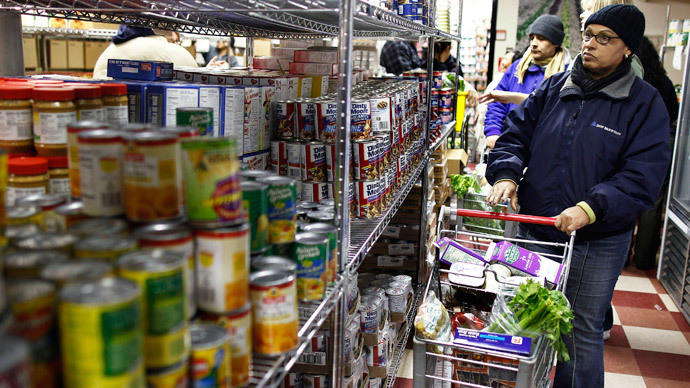 Food banks across New York state are running out of food due to rising need and falling benefits. Now they are asking the state legislature for an additional $16 million in funding, just to keep the shelves stocked through the end of the year. Throughout New York, about 2.6 million people have trouble affording food, and must make the difficult choice between eating and paying for other necessities like rent, medication, child care or transportation, according to the Food Bank For New York City. So they turn to food pantries to help. Yet those same locations are running short on food. “Being in New York [City], I think, is both a blessing and a curse. I mean, there is a lot of food, there is a lot of people, we’re a big city, but we’re also a city with very high need,” Triada Stampas, Food Bank For New York City’s vice president for research and public affairs, told RT’s Alexey Yaroshevsky. “There’s about 1.4 million New York City residents ‒ so just here in New York City ‒ who rely on food pantries and soup kitchens over the course of a year. That’s about 16 percent of our population.” The Food Bank For New York City is the supplier for one of the city’s biggest food pantries, where the shelves being fully stocked is the exception, not the rule, she noted. “We’re seeing food banks and soup kitchens reporting food shortages at much higher rates than they had been before,” Stampas said. “In one month alone ‒ last September ‒ 60 percent of the city’s food pantries and soup kitchens reported running out of food.” The situation is even worse in the rest of the state, leading Hunger Action Network to ask the New York legislature for $16 million in additional funding… just to get through the end of the year. It would be a mere drop in the bucket out of the $2.6 billion in currently unallocated funds in New York’s 2015 budget, Yaroshevsky reported. Michael Berg, the director of an organization that runs three food pantries in Ulster County, told AP that requests for food there have risen by about 20 percent each year for the last few years. In Albany, a coalition of 53 food pantries says it is seeing its highest demand in its 36-year history. Contrary to the stereotype that people visiting food pantries are homeless and jobless, most customers are employed, but it’s still not enough to put food on the table without help. “Most people who actually use pantries are actually the working poor. And they are working, they just don’t get paid enough money,” Susan Zimet, director of the Hunger Action Network, told RT. “Also, a lot of seniors who have not seen their Social Security increase keeping pace with the cost of food, they cannot afford food. You also have veterans, veterans are not getting paid enough to support their family and then be deployed overseas.” “On a local level, people are falling further and further behind,” she added. Food banks across the country have had to do more with less for nearly two years now, ever since the US Congress cut federal Supplemental Nutrition Assistance Program benefits ‒ food stamps ‒ by an average of $18 a month. About 40 percent of those receiving SNAP benefits then turn to emergency food services, leading to an increase in demand, according to the New York Times. Read More Here The post NY food banks seek $16 million in state funding to restock their barren shelves appeared first on USAHM Conspiracy News.    |
|
Posted: 04 Jun 2015 05:57 PM PDT
 This week the world stopped turning to focus on the recent debut of Caitlyn Jenner, the Olympic athlete formerly known as Bruce. Jenner, the ex-husband of Kris Jenner and stepfather to Kim Kardashian, took a bold step in announcing her completed transition into the woman she always felt she was. She posed on the cover of Vanity Fairto premiere her new identity. This a monumental step forward for the transgender community that many hope will help foster increased tolerance in society. While this is a positive development, the degree of media attention devoted to the celebrity news story left many other equally important stories ignored. While the world was debating whether or not it was Jenner’s right to become a woman, here are ten significant stories that deserve equal, if not more, attention: 1. Rand Paul received widespread coverage for delaying the Patriot Act’s renewal at the end of May. As a result of his filibuster and congressional inaction, the Patriot Act and its Section 215—one of the NSA’s justifications for bulk data collection—expired on Monday. Though this was lauded as a victory, this week the Senate pushed through the USA Freedom Act, selling it as a bill to respect the privacy of Americans. In actuality, it renews and arguably strengthens the government surveillance apparatus. 2. On Tuesday, news broke that the FBI has been conducting warrantless surveillance across the United States using a fleet of planes disguised as private aircrafts. It was responsible for mysterious planes flying over the Baltimore protests in May and surveilled as many as 40,000 people in one flight over Anaheim, California. In similar news, it was revealed this week that a single local police department conducted over 300 warrantless searches using highly secretive and controversial Stingray technology. 3. This week, NBC was caught manipulating footage of a witness interview to make the police shooting of unarmed college student, Feras Morad, seem less sinister to its audience. His death was one of nearly 400 police killings logged this year, alone. 4. In what appears to be good news, Congress moved this week to require police to report all killings and uses of force committed on duty. There has previously been no requirement and only 750 of 17,000 police departments voluntarily report such data. The law also requires reporting of police deaths on duty (this was already codified in alaw passed in May) but nevertheless, signifies a growing shift toward police accountability. 5. A Department of Homeland Security investigation found that in 95% of cases, the TSA failed to find weapons and mock explosives smuggled through airports. Undercover DHS agents managed to sneak through 67 of 70 incidents without any hassle from the TSA, the administration that claims its services are necessary to keep Americans safe. 6. A “high value” Guantanamo detainee, Majid Khan, alleged this week that he was tortured by CIA agents with tactics worse than previously revealed. Though the Senate’s December torture report detailed gruesome techniques including forced rectal feeding and sleep deprivation, Khan claims he was sexually abused, hung nude from beams, and had his genitals dipped in ice water—among other offenses. 7. In a continuing, unsettling pattern, three more stories came to light of bankers meeting their death. The executive of American Express died mysteriously on an international flight while another jumped off the 24th floor of his apartment building in an apparent drug-induced suicide. Another story released this week detailed a Goldman Sachs employee found dead in her car in April. They join a growing list of bankers whose lives have ended prematurely. Read More Here The post 10 Things You Were Successfully Distracted From While Obsessing About Bruce Jenner appeared first on USAHM Conspiracy News.   |

