
USAHitman | Conspiracy News |  |
- US Army Website Hacked by Syrian Electronic Army
- Inspectors audit shows TSA failed to vet 73 workers ‘linked to terrorism’
- Man jailed at Rikers Island without charges for 3 years commits suicide
|
Posted: 08 Jun 2015 06:12 PM PDT
A hacker group backing the Syrian government claimed responsibility for hacking the official website of the US Army, just hours after President Obama called for new cybersecurity laws at the G-7 summit in Germany.
Army.mil was still down Monday afternoon. Loading a cached version of the site resulted in pop-ups proclaiming the site was “Hacked by the Syrian Electronic Army,” and messages such as “Stop training the terrorists!” and “Your government is corrupt don’t listen to it!” reported the National Journal. Hackers calling themselves the Syrian Electronic Army swiftly took responsibility for the attack, posting images on their Twitter account. 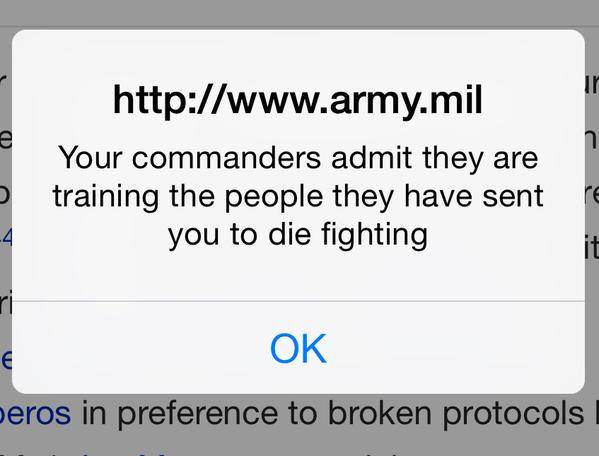 Another image indicated the hackers used the Limelight content management system’s control panel to take control of the site. 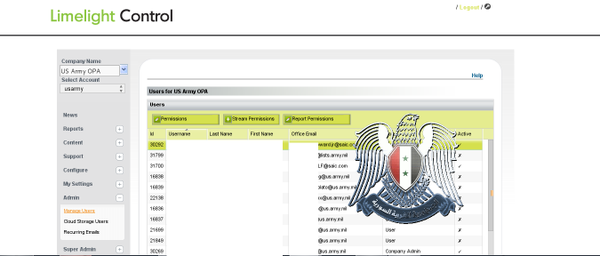 US Army officials said the website was taken down temporarily, after its home page was compromised. “The Army took appropriate preventative measure to ensure there was no breach of Army data,” Army spokesman Brigadier General Malcolm Frost said in a statement. Monday’s attack may have been the first breach of a website directly operated by the US military. In January, a group calling itself the “Cyber Caliphate” hijacked the Twitter and YouTube accounts of the US Central Command (CENTCOM), posting links to documents they claimed to be confidential files pilfered from US military computers. CENTCOM said its operational military networks “were not compromised and there was no operational impact,” and denied any leaks of classified information, adding that it considered the hack “purely as a case of cybervandalism.” Source The post US Army Website Hacked by Syrian Electronic Army appeared first on USAHM Conspiracy News.       |
|
Posted: 08 Jun 2015 05:20 PM PDT
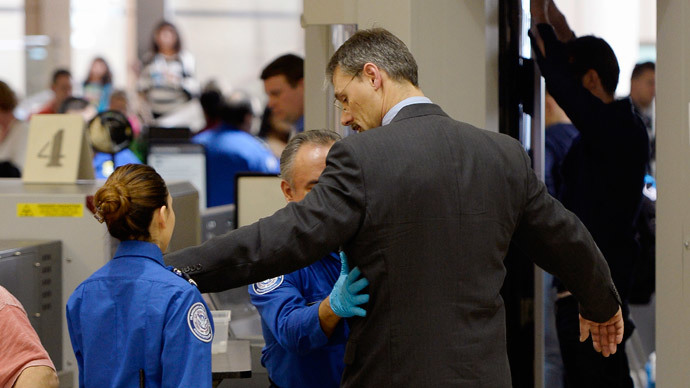 The Transportation Security Administration failed to identify 73 airport workers whose names appeared on a government terrorism watch list. Of concern is that the workers had access to secured areas of commercial airports. In the findings in the Department of Homeland Security audit, the TSA designed a multi-layered set of controls for vetting workers such as matching workers to credentials, and re-vetting nearly 1 million workers against new watch-lists when issued. To test the veracity of the TSA’s vetting process, the National Counterrorism Center was asked to match more than 900,000 records of active aviation workers against its Terrorist Identities Datamart Environment (TIDE) database. Auditors found that agency personnel did not identify 73 people with terrorism-related codes. Because parts of the IG audit report were redacted, it’s not clear which categories the workers were listed under but the TSA acknowledged that “these individuals were cleared for access to secure airport areas despite representing a potential transportation security threat.” “The TSA did not identify these individuals through its vetting operations because it is not authorized to receive all terrorism-related categories under current interagency watch-listing policy,” the Inspector General report stated. The TSA is not allowed access to TIDE-only codes because they are not included on the Terrorist Screening List. The TSA said not receiving the additional codes for screening “represented a weakness in the program,” and could pose potential threats to aviation security if the TSA is not given a chance to examine the information and “assess any potential associated risk.” One of the report’s six recommendations is to follow up on TSA’s request “to determine if its credential vetting program warrants the receipt of additional categories of terrorism related records.” Inspectors said that the vetting and re-vetting was “generally effective” with identifying workers with links to terrorism, and since 2003 the agency had denied or revoke 58 airport workers as a result of its vetting process. The audit comes right in time for TSA workers flunking security tests at airport checkpoints last week, and exposing massive security breaches. The TSA was established in 2001 to ensure the safety and smooth passage of people at US transportation systems. One of the agency’s responsibilities is to vet workers who are employed by major airlines, airport vendors and other employers. The redacted audit found, though, that the TSA had a poor record of checking an applicant’s criminal history and authorization to work in the United States, relying instead on 467 commercial airports and air carriers to vet them. “According to vetting officials, TSA can only vet workers based on data received from airports,” said the report. The report also found that TSA had to send nearly 29,000 inquiries to credential applicants since the program began in 2003. Of those applicants they had to deny credentials to 4,800 potential workers because it could not verify their lawful status, even though airport personnel said the people had passed the airports’ own work authorization verification. The audit also found that 75,000 aviation workers didn’t provide their passport numbers, 14,000 did list their alien registration number and nearly 87,000 active aviation workers did not have a Social Security number listed. The agency is not authorized to collect SSNs but only to encourage workers to submit the data. The release of the audit comes less than a week after security tests at airport checkpoints exposed massive security breaches. Undercover federal agents were 95 percent successful at sneaking fake bombs and other banned weapons past airport security checkpoints during multiple tests. Read More Here The post Inspectors audit shows TSA failed to vet 73 workers ‘linked to terrorism’ appeared first on USAHM Conspiracy News.    |
|
Posted: 08 Jun 2015 05:18 PM PDT
 Kalief Browder, arrested for stealing a backpack and jailed at the infamously violent Rikers Island prison in New York City for three years without charge, has committed suicide. His case helped spark reform of the city’s criminal justice system. Browder, 22, ended his life at his family’s home in the Bronx, according to a report by The New Yorker, which wrote about Browder’s case last year. Kalief Browder was initially arrested on his way home on May 14, 2010, after an unknown individual identified the teenager, then 16 years old, as the person who robbed him a few weeks prior. Browder was charged with second-degree robbery and, unable to post the $10,000 bail at the time of his arrest, was transferred to Rikers Island. The case never went to trial, however, and Browder languished at Rikers Island until the charges were dropped without explanation in June 2013. His stay at the prison included around two years of solitary confinement. “No apology, no nothing,” Browder told WABC in November 2013. “They just said, ‘Oh, case dismissed. Don’t worry about nothing.’ What do you mean, ‘Don’t worry about nothing?’ You just took over three years of my life.” More than two and a half years into his detainment, Browder was offered a plea deal that would have likely released him under a time served sentence. He did not take the deal because he did not want to admit guilt for the crime. Browder struggled with depression and attempted suicide several times both during and after his incarceration, according to The New Yorker. He spent time in the psychiatric wards of both St. Barnabas Hospital in the Bronx and Harlem Hospital after his release. Browder has said he was subject to numerous assaults and beating from prison guards and other inmates. Rikers Island surveillance footage of two instances in which he was assaulted — one by an officer and one by a large group of inmates — were provided to The New Yorker. Upon his suicide, The New Yorker’s Jennifer Gonnerman — also author of the feature article on Browder published last October — wrote that he was interested in public release of the footage if only to prevent others from suffering the same fate. “He was driven by the same motive that led him to talk to me for the first time, a year earlier,” Gonnerman wrote. “He wanted the public to know what he had gone through, so that nobody else would have to endure the same ordeals.” Read More Here The post Man jailed at Rikers Island without charges for 3 years commits suicide appeared first on USAHM Conspiracy News.    |

