
USAHitman | Conspiracy News |  |
- US govt researching biometric tattoo ink recognition
- CIA releases 9/11-related internal documents
- North Korea accuses US of anthrax attack
- Reports of synthetic marijuana poisoning up 229% in 2015
|
Posted: 12 Jun 2015 08:43 PM PDT
 Tattoos might be the next biometric frontier, with one in five Americans sporting ink these days. The FBI is partnering with academia and private firms to develop a computer program that could help police identify people based on their body ink. Matching tattoos with the government database could help officials identify victims of natural disasters, such as earthquakes or tsunamis. However, the government’s primary interest is they believe matching the tattoos into a computer system, could help to catch more criminals, as they have more body ink than the general population, according to computer scientist Mei Ngan. Ngan works at the National Institute for Standards and Technology (NIST), a branch of the Department of Commerce that teamed up with the FBI to organize a “challenge” workshop. This gave an opportunity to universities and corporations to show off the results of their research into tattoo-matching technology. “You can’t use it as a primary biometric like a finger print or face because it’s not necessarily uniquely identifying,” Ngan told the Washington Post. “But it can really help in cold cases where you don’t have those things.” Alvaro Bedoya, of the Center on Privacy & Technology at Georgetown Law School, told the Post that identifying people on the basis of tattoos is less controversial than facial recognition or motion analysis, but that technology may be outpacing the law. “People are being identified remotely without their knowledge,” Bedoya said, “and right now the Fourth Amendment doesn’t really say anything about that.” Each team was given the same set of images, drawn from the FBI’s existing Next Generation Identification database that includes tattoos in addition to fingerprints and facial recognition. Currently, the database relies on written description of the tattoos, which can be vague and sometimes not particularly helpful, says Ngan. Some of the systems had “hit rates well above 90 percent” in certain tests, like matching a partial photo of the tattoo to the whole thing. Two areas that needed further research, Ngan said, were distinguishing similar tattoos on different people, and recognizing a tattoo from a sketch or a drawing, rather than a photo. “Improving the quality of tattoo images during collection is another area that may also improve recognition accuracy,” Ngan said. Participants in the NIST workshop included the imaging company Compass Technical Consulting, the Fraunhofer Institute of Optronics, System Technologies and Image Exploitation, the French Alternative Energies and Atomic Energy Commission, the nonprofit research organization MITRE, the biometric tracking technology firm MorphoTrak, and Purdue University. Founded in 1901, the NIST is one of the oldest US government science laboratories. It has been at the forefront of biometric research for decades, conducting mass evaluations of fingerprint and face recognition systems. Source The post US govt researching biometric tattoo ink recognition appeared first on USAHM Conspiracy News.       |
|
Posted: 12 Jun 2015 08:38 PM PDT
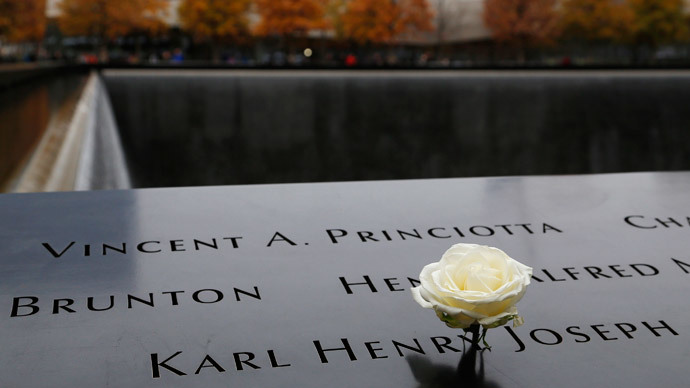 Five documents assessing CIA conduct before and immediately after the 9/11 terror attacks were released Friday. The redacted files include the previously unavailable 2005 assessment of the CIA, as well as reactions by relevant officials. “In response to FOIA requests for the full 2005 OIG report, CIA and other agencies conducted an extensive review of the nearly 500-page document in order to release information that no longer needed to be protected in the interests of national security,” the agency said in a statement. One of the documents released on Friday is the redacted version of the 2005 report by the CIA Office of Inspector General (OIG), examining the agency’s accountability and intelligence community activities before and after the September 2001 terrorist attacks. The CIA had previously released only a heavily redacted executive summary of that report. Among the new documents are two internal memos by CIA Director at the time, George Tenet, responding to drafts of the OIG report in February and June 2005. Versions of the August 2001 OIG report about the DCI Counterterrorism Center (CTC), and a July 2005 memo from 17 CTC officers responding to the 2005 OIG report, have been made public previously. Friday’s release, however, has disclosed some of the information previously redacted, “in light of the recent declassification of information on CIA’s counterterrorism operations,” the CIA said. The five documents can be read at the agency’s FOIA page. Fears the CTC may miss somethingThe August 2001 report on the CTC calls it a “well-managed component that successfully carries out the agency’s counterterrorist responsibilities to collect and analyze intelligence on international terrorism and to undermine the capabilities of terrorist groups.”However, the report heard from some officers that the “demands placed on the CTC do not allow it to exploit all the information it receives. As a consequence, the risk exists that a potential warning will go unidentified.” Pushback from Director Tenet, CTC“Covert action is not successful in the absence of hard foreign intelligence,” George Tenet wrote in the first response to the OIG report, in February 2005. “It was clear to me at the time that while we had been somewhat successful in pursuing a law enforcement approach in battling Al-Qaeda, we did not have adequate SIGINT coverage and did not have enough human penetrations of Al-Qaeda.”“We needed more and better basic intelligence,” the former CIA director wrote. “Covert action against Bin Laden and his key operatives was not possible without it.” By June 2005, Tenet was still displeased the OIG was accusing him of “not devoting professionalism, skill and diligence in countering terrorism.” “I object to and reject these accusations,” he wrote. Tenet wrote that the National Security Council and the Attorney General of the US, rather than himself, had written the instructions sent to agents in the field that “made clear the Government’s policy preference was to capture Bin Laden and his principal lieutenants and render them to the United States.” A July 4 memo, signed by 17 CTC officers, complains that the OIG was “concentrating its efforts on attempting to find individuals to blame.” OIG report from June 2005“Concerning certain issues,” the Inspector General Team “concluded that the agency and its officers did not discharge their responsibility in a satisfactory manner.”“The team found no instance in which an employee violated the law, and none of the errors discussed herein involve misconduct.” The investigators found that the CIA “worked hard” against Al-Qaeda and Osama Bin Laden, but “did not always work effectively and cooperatively.” “Basically, there was no coherent, functioning watchlisting program,” the OIG report argues, citing the example of Nawaf al-Hazmi and Khalid al-Midhar. The two were suspected Al-Qaeda terrorists whom the CIA tracked to Malaysia in January 2000. However, none of the 50-60 CIA officers who had read the documents relating to the two men shared any information with other agencies. The CIA informed the State Department so late, the two men were only put on a terrorist watch list in August 2001. By that time, they were already inside the US, and would take part in the 9/11 hijackings. The Saudi connection: Still redactedAs for the rumored “Saudi connection,” that section of the OIG report remains mostly redacted. The one part that was released amounts to the OIG admitting it “encountered no evidence that the Saudi Government knowingly and willingly supported Al-Qaeda terrorists.”“Individuals in both the Near East Division (NE) and the Counterterrorist Center [REDACTED] told the Team they had not seen any reliable reporting confirming Saudi Government involvement with and financial support for terrorism prior to 9/11, although a few also speculated that dissident sympathizers within the government may have aided Al-Qaeda,” the report notes. “A January 1999 Directorate of Intelligence (DI) Office of Transnational Issues Intelligence Report on Bin Laden’s finances indicated that ‘limited’ reporting suggested that ‘a few Saudi Government officials’ may support Osama Bin Laden but added that the reporting was ‘too sparse to determine with any accuracy’ such support,” the un-redacted portion of the document concludes. Source The post CIA releases 9/11-related internal documents appeared first on USAHM Conspiracy News.    |
|
Posted: 12 Jun 2015 05:47 PM PDT
 North Korea has accused the US of trying to target its people by sending a live anthrax sample to a US base in South Korea. Pyongyang asked the UN to investigate America’s “biological warfare schemes,” while Washington laughed off the allegations. “The United States not only possesses deadly weapons of mass destruction… but also is attempting to use them in actual warfare against (North Korea),” Pyongyang’s UN Ambassador Ja Song Nam wrote in a letter to the UN Security Council and UN Secretary-General Ban Ki-moon. The letter dated June 4 was made public on Friday and included an attached statement from North Korea’s National Defense Commission, blaming the US with a “hideous crime aimed at genocide.” North Korea sounded the alarm after the Pentagon announced that several countries outside the US are known to have received live anthrax samples over the course of a one-year period. South Korea was on the list of foreign countries that inadvertently received the germs that can be used as a biological weapon. On Friday the US raised the number of foreign countries that received the deadly bacteria to five, revealing that it shipped live anthrax to an American base in Japan. Australia, Canada and Britain are also among the states said to have received it. While the US Department of Defense has said that the investigation has not found any indication that the samples were sent as a result of a deliberate action, North Korea urged the world to consider the shipments America’s “gravest challenge to peace.” Pyongyang “strongly requests the Security Council take up the issue… in order to thoroughly investigate the biological warfare schemes of the United States,” its address to the UN said. The spokesman for the current council president said he had not heard of any initiatives on the council to take up the issue, but would inquire further, the Guardian reported. Washington acknowledged it had seen the letter, but chose not to respond to it. “The allegations are ridiculous. They don’t merit a response,” US State Department spokesman Jeff Rathke said, as quoted by Reuters. Source The post North Korea accuses US of anthrax attack appeared first on USAHM Conspiracy News.    |
|
Posted: 12 Jun 2015 05:15 PM PDT
 Spice, K2 and other synthetic cannabinoids are marketed as safe, legal alternatives to marijuana, but calls to US poison control centers about users of the chemical products skyrocketed in the first few months of 2015, according to the US government. Monthly calls related to the adverse effects of synthetic marijuana jumped 330 percent between January and April, the Centers for Disease Control and Prevention (CDC) said on Friday. The number of those calls to poison control centers between January and May was also a 229 percent increase over the same time period in 2014, from 1,085 calls to 3,572. The increased calls due to adverse reactions included 15 deaths between January and May 2015, three times higher than those same months in 2014. In January, a US soldier who was self-monitoring for Ebola died near Fort Hood, Texas. It turned out that his death was due to “synthetic cannabinoid intoxication” from Spice, his autopsy found. The most commonly reported adverse health effects were agitation at 35.3 percent of calls, tachycardia (29 percent), drowsiness or lethargy (26.3 percent), vomiting (16.4 percent) and confusion (4.2 percent). When medical outcomes were reported for the calls, 335 ‒ or 11.3 percent ‒ had a major adverse effect, meaning signs or symptoms that are life-threatening or result in substantial residual disability or disfigurement. Almost half of callers ‒ 47.5 percent ‒ had moderate effect, while 37 percent had a minor effect, meaning minimally bothersome. Synthetic cannabinoids are known by a variety of names, such as synthetic marijuana, spice, K2, black mamba and crazy clown, and can be sold legally as herbal products. They are made of various psychoactive chemicals that are sprayed onto plant material, which is then often smoked or ingested to achieve a “high” similar to that of regular marijuana. “The increasing number of synthetic cannabinoid variants available, higher toxicity of new variants, and the potentially increased use as indicated by calls to poison centers might suggest that synthetic cannabinoids pose an emerging public health threat,” CDC epidemiologist Royal Law wrote in the agency’s Morbidity and Mortality Weekly Report, which analyzed data tracked by the National Poison Data System. “Multiple other recent outbreaks suggest a need for greater public health surveillance and awareness, targeted public health messaging, and enhanced efforts to remove these products from the market,” Law added. The Drug Enforcement Agency designated the five active chemicals found in Spice and other such synthetic products as Schedule I controlled substances, making it illegal to sell, buy or possess them. The problem with regulating or banning the products is that the producers of synthetic marijuana products are continually tweaking their formulas. The herbal mixtures themselves are legal, albeit labeled as “not for human consumption.” “Manufacturers of Spice products attempt to evade these legal restrictions by substituting different chemicals in their mixtures, while the DEA continues to monitor the situation and evaluate the need for updating the list of banned cannabinoids,” the National Institute on Drug Abuse (NIDA) says in its drug facts on synthetic marijuana. Read More Here The post Reports of synthetic marijuana poisoning up 229% in 2015 appeared first on USAHM Conspiracy News.   |

