|
Editor's Note
Shavuot begins this year on Tuesday evening,
June 7, 2011,
and continues through nightfall of June 9, 2011. What
follows is a how-to guide to the basics of Shavuot
observance.
Out of respect for the sanctity of the holiday, please print
out this holiday guide before the onset of the
holiday (sundown Tuesday, June 7), and keep handy
throughout the holiday for reference purposes.
The Chabad.org staff wishes you and yours a happy Shavuot!
|
Shavuot 101
What Is Shavuot?
The
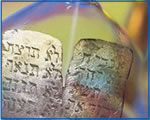
Torah was given by G‑d to the Jewish people on Mount Sinai more than
3300 years ago. Every year on the holiday of Shavuot we renew our
acceptance of G‑d's gift, and G‑d "re-gives" the Torah.
The word
Shavuot means "weeks." It marks the completion of the seven-week counting period between Passover and Shavuot.
The giving of the Torah was a far-reaching spiritual event-one that
touched the essence of the Jewish soul for all times. Our sages have
compared it to a wedding between G‑d and the Jewish people.
Shavuot also means "oaths," for on this day G‑d swore eternal devotion to us, and we in turn pledged everlasting loyalty to Him.
The holiday of Shavuot is a two-day holiday, beginning at sundown
of the 5th of Sivan and lasting until nightfall of the 7th of Sivan.
(In Israel it is a one-day holiday, ending at nightfall of the 6th of
Sivan.)
- Women and girls light holiday candles to usher in the holiday, on both the first and second evenings of the holidays.
- It is customary to stay up all night learning Torah on the first night of Shavuot.
- All men, women and children should go to the synagogue on the first day of Shavuot to hear the reading of the Ten Commandments.
- As on other holidays, special meals are eaten, and no "work" may be performed.
- It is customary to eat dairy foods on Shavuot. Among other reasons,
this commemorates the fact that upon receiving the Torah, including the
kosher laws, the Jewish people could not cook meat in their pots, which
had yet to be rendered kosher.
- On the second day of Shavuot, the Yizkor memorial service is recited.
- Some communities read the Book of Ruth publicly, as King David-whose
passing occurred on this day-was a descendant of Ruth the Moabite.
Click here for more about Shavuot.
What Is the Torah?

The
Torah is composed of two parts: the Written Law and the Oral Law. The
written Torah contains the Five Books of Moses, the Prophets and the
Writings. Together with the Written Torah, Moses was also given the Oral
Law, which explains and clarifies the Written Law. It was transmitted
orally from generation to generation, and eventually transcribed in the
Mishnah, Talmud, Midrash, and the entire corpus of Torah literature that
was developed over the millennia.
The word
Torah means "instruction" or "guide." The Torah guides our every step and move through its 613 mitzvahs. The word
mitzvah
means both "commandment" and "connection." Through the study of Torah
and fulfillment of mitzvahs, we connect ourselves and our environment to
G‑d. G‑d's purpose in creating the world is that we sanctify all of
creation, imbuing it with holiness and spirituality.
On the holiday of Shavuot, the entire Jewish nation heard from G‑d
the Ten Commandments. The next day Moses went up to Mount Sinai, where
he was taught by G‑d the rest of the Torah-both the Written and Oral
Laws-which he then transmitted to the entire nation.
The Role of Children
The
holiday of Shavuot is the day on which we celebrate the great
revelation of the giving of the Torah at Mount Sinai, 3323 years ago.
You stood at the foot of the mountain. Your grandparents and
great-grandparents before them. The souls of all Jews, from all times,
came together to hear the Ten Commandments from G‑d Himself.
This year, on Wednesday, June 8, go to your local synagogue to hear
the Ten Commandments and reaffirm the covenant with G‑d and His Torah.
Since we all stood at Mount Sinai, we must all reaffirm our
commitment. Babies, young children, the elderly, all that are able
should attend.
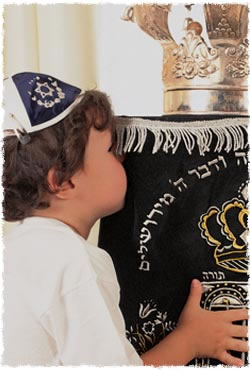
There is also special significance to bringing children, even the youngest of infants, to hear the Ten Commandments.
Before G‑d gave the Torah to the Jewish people, He demanded
guarantors. The Jews made a number of suggestions, all rejected by G‑d,
until they declared, "Our children will be our guarantors that we will
cherish and observe the Torah." G‑d immediately accepted them and agreed
to give the Torah.
Let us make sure to bring along all our "guarantors" to the synagogue on the first day of Shavuot.
Click here to find a synagogue closest to you.
Holiday Traditions

Learning on Shavuot night
On the first night of Shavuot (this year, Tuesday night, June 7),
Jews throughout the world observe the centuries-old custom of conducting
an all-night vigil dedicated to Torah learning and preparation for
receiving the Torah anew the next morning. One explanation for this
tradition is that the Jewish people did not rise early on the day G‑d
gave the Torah, and it was necessary for G‑d Himself to awaken them. To
compensate for their behavior, Jews have accepted upon themselves the
custom of remaining awake all night.
The Book of Ruth
The Book of Ruth is recited as part of the program of study for
Shavuot night. Additionally, in many synagogues it is read publicly on
the second day of Shavuot. There are several reasons for this custom.
Here are two of them:
- Shavuot is the birthday and yahrtzeit (anniversary of
passing) of King David, and the Book of Ruth records his ancestry. Ruth
and her husband Boaz were King David's great-grandparents.
- Ruth was a sincere convert who embraced Judaism with all her heart.
On Shavuot all Jews were converts-having accepted the Torah and all of
its precepts.
Eating Dairy Foods
It is customary to eat dairy foods on the first day of Shavuot. There are a number of reasons for this custom. Here are a few:
- On the holiday of Shavuot, a two-loaf bread offering was brought in
the Temple. To commemorate this, we eat two meals on Shavuot-first a
dairy meal, and then, after a short break, we eat the traditional
holiday meat meal.
- With the giving of the Torah, the Jews became obligated to observe
the kosher laws. As the Torah was given on Shabbat, no cattle could be
slaughtered nor could utensils be koshered, and thus on that day they
ate dairy.
- The Torah is likened to nourishing milk. Also, the Hebrew word for milk is chalav, and when the numerical values of each of the letters in the word chalav
are added together-8 + 30 + 2-the total is forty. Forty is the number
of days Moses spent on Mount Sinai when receiving the Torah.
Adorning the Home with Greenery and Flowers
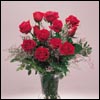
Since
Shavuot is also called the "Harvest Festival," it is customary to adorn
the home and synagogue with fruits, flowers and greens. Furthermore,
our Sages relate that although Mount Sinai was situated in a desert,
when the Torah was given the mountain bloomed and sprouted flowers.
NOTE: All floral arrangements should be done early on Tuesday,
before the onset of the holiday, to respect the sanctity of Shavuot.
Shavuot Calendar 2011
During the course of the
holiday we don't go to work, drive, write, or switch on or off electric
devices. We are permitted to cook, to kindle a stove with a flame that
existed before the holiday (or which was lit from such a flame), and to
carry outdoors.
|
�
Tuesday,
Sivan�5-June�7
|
Shavuot eve
The holiday of Shavuot begins at sundown tonight.
Women and girls light candles tonight to usher in the holiday. Click here
for candle-lighting times in your city, and see below for the blessings
one recites while lighting. If kindling after sunset, light from a
pre-existing flame.
After the holiday evening prayers, a festive holiday meal, complete with the recitation of the holiday kiddush, is enjoyed.
On this night it is customary to remain awake and study Torah until dawn.
|
|
g
|
|
�
Wednesday,
Sivan�6-June�8
|
First day of Shavuot Torah reading: Exodus 19:1-20:23; Numbers 28:26-31
Haftorah: Ezekiel 1:1-28; 3:12
Reading of the Ten Commandments.
All men, women and children should go to the synagogue to hear the reading of the Ten Commandments. Click here to find a synagogue near you.
The Lubavitcher Rebbe, Rabbi Menachem M. Schneerson, of righteous memory, encouraged the bringing of even the youngest of children
to the reading of the Ten Commandments in the synagogue on Shavuot.
This is in commemoration of the Jewish people declaring: "Our children
are our guarantors [that we will keep the Torah]." This, the Midrash
states, was the only guarantee acceptable to G‑d.
The priests bless the congregation with the Priestly Blessing during the Musaf prayer.
Many communities chant the Akdamut poem before the reading of the Torah.
Kiddush is recited, and a holiday meal follows.
Candle-lighting, from a pre-existing flame, after nightfall. Click here for candle-lighting times in your city, and see below for the blessings.
After the holiday evening prayers, a festive holiday meal, complete with the recitation of the
holiday kiddush, is again enjoyed.
|
|
g
|
|
�
Thursday
Sivan�7-June�9
|
Second day of Shavuot Torah reading: Deuteronomy 15:19-16:17; Numbers 28:26-31
Haftarah: Habakkuk 2:20-3:19
The Yizkor memorial service is recited (and charity is pledged) for the souls of departed loved ones.
The priests bless the congregation with the Priestly Blessing during the Musaf prayer.
Kiddush is recited, and a holiday meal follows.
Some communities have the custom to read the Book of Ruth on the second day of Shavuot.
The holiday ends tonight at nightfall. Click here for end of holiday times in your location.
|
�
Candle-Lighting Blessings
For both evenings of the holiday:
- Ba-rooch Ah-tah Ah-doh-nai Eh-lo-hei-nu Meh-lech ha-oh-lam ah-sher
kee-deh-sha-nu beh-mitz-voh-tav veh-tzee-va-nu leh-had-lik neir shel yom
tov.
(Translation:) Blessed are You, L‑rd our G‑d, King of the universe, who
has sanctified us with His commandments, and commanded us to kindle the
holiday light.
- Ba-rooch Ah-tah Ah-doh-nai Eh-lo-hei-nu Meh-lech ha-oh-lam
sheh-heh-cheh-yah-nu veh-kee-yeh-mah-nu ve-hee-gee-ah-nu liz-man ha-zeh.
(Translation:) Blessed are You, L‑rd our G‑d, King of the universe, who
has granted us life, sustained us, and enabled us to reach this
occasion.
Useful Shavuot Links:
Shavuot Mega-Site
Global Shavuot Event Finder
The Story of Shavuot
Shavuot Personalities
Holiday Insights
Underage Underwriters-60-Second Inspirational Video Clip
Shavuot Kids' Zone
Traditional Shavuot Recipes
Shavuot Audio Classes, Videos and Songs