
The European Union Times |
- German filmmaker imprisoned for exposing dire Qatar World Cup worker conditions
- Ecuador Shows Biblical Giant Humans to the World
- Russian weapons coming to Brazil instead of American ones
- US Senate to announce debt limit deal
- 17 dead as Typhoon Wipha pounds Japan
|
Posted: 16 Oct 2013 12:28 PM PDT
 Toiling in terrible conditions, no salaries for months, passports confiscated by employers – that’s the horrendous reality for migrant workers helping with preparations for the World Cup 2022 in Qatar, as revealed by German filmmaker, Peter Giesel. He and his cameraman were detained and imprisoned after they tried to investigate the story. The two went to Qatar following the publication of a report in the Guardian, claiming that workers are enduring appalling labor abuses. Giesel said that they were arrested in their hotel rooms on October 3 and taken to police headquarters. There, all their equipment was impounded, and police then took the filmmakers to the State Security prison in the suburbs of Doha. RT exclusively interviewed filmmaker Peter Giesel to find out about their experiences, and what they witnessed while covering the issue in Doha. “We were there, in those separate cells, in [sic] the total of 21 hours. We were treated quite well, we got good food, to be honest, but the bad thing about those 21 hours was that we weren’t allowed a single phone call: not to our embassy, not to our families, no one was there to tell us what the charge was really, so we were kind of desperate in there, not having any contact with the outside world,” Giesel stressed. Prior to their confinement, he and his cameraman met with migrant workers who told them about their plight. One of the men interviewed worked for 12 years as an accommodation specialist, but, as Giesel indicated to RT, “ironically, his accommodation itself doesn’t even have a fan.” The man hasn’t been getting his salary and bonuses for a number of years, and his main difficulty is to fight a case against his boss and his firm: the employer took his passport from him, and the 35-year-old worker hasn’t made the money necessary to return home, “the devilish circle”, as Peter Giesel put it to RT. Another group of guys – there were four of them – weren’t paid for seven months in a row and were trying to file a case when Giesel met them. As the filmmaker explained, one of the main issues surrounding migrant workers is that they are employed under the so-called kafala system, which is “a law basically stating that every migrant worker that comes into Qatar has to find his own personal sponsor meaning his boss, the firm or corporation he’s working for.” “And that sponsor has to take care of him legally and medically, but obviously, most of the sponsors take their passports away from the migrant workers. That puts maybe tens of thousands of them in a miserable situation. They can’t make any money to go home, so they’re trapped down there.” Moreover, migrant employees can’t rely on outside forces such as their countries’ embassies, according to Giesel. “I had a chance to sneak into the Nepalese embassy and do my recordings down there. It seems to be some kind of chaos: the bureaucracy not only in the embassies, but also in the Qatari system might be too overwhelming for those 1.4 million migrant workers to be treated fairly,” he told RT. Despite the disastrous situation, Giesel is certain that the World Cup in Doha won’t be canceled, as “there’s just too much money involved in it. There are sponsorships, contracts ready, most of them signed already, there’s big political money, there’s big infrastructural money. Right now, there are billions spent down there in Doha to put up the streets, to put up new shopping malls, to put up new stadiums indeed.” The FIFA President, responding to the outrage, said that he would speak with the country’s emir about the situation, but “we can’t be the ones who change it.” Giesel said that they were detained in their hotel rooms on October 3 and taken to police headquarters. There, all their equipment was taken from them, and police then took the filmmakers to the State Security prison in the suburbs of Doha. Finally, when asked why migrants continue to come to Qatar despite the difficulties, Giesel simply said that they “make more money out there.” “Although the salaries average an estimated $350 a month, even for specialist workers, it’s more than in their home countries: Nepal, Bangladesh…” Giesel told RT. Source Related Posts: |
|
Posted: 16 Oct 2013 10:43 AM PDT
 In Loja province, Southern Ecuador and Peru border, many strange relics have been uncovered. Bones and full skeletons very similar to those of humans but of incredible size. These artifacts have been watched over for many years by several guardians in the beautiful valleys of that Province. By far the most famous and well known of these “guardians” was Father Carlos Miguel Vaca, who guarded until his death in 1999, several bones and fragments, unearthed from a site called “Changaiminas” which translated means “Gods cemetery.” Several fragments were redirected to the Smithsonian Institution of the United States of America, for people to study their density, age, weight etc. This was broadcast on a television program for Ecuador, which lasted two hours, led by renowned director Alfonso Espinosa De Los Monteros. Now some pieces from that collection have been shown to the world by renowned UFO researcher Klaus Dona. Several other important relics and fragments are known to be in private collections, by people who are not interested in sharing them, at least not with the public. From the aforementioned fragmented skeleton, seven fragments were studied by different scientists and anatomists, and they have confirmed, that they are part of a human skeleton that was seven times the size of a modern human. Quartz formations porocidades covering the surface of the bones, indicated that the relics were tens of thousands of years old.        Source Related Posts: |
|
Posted: 16 Oct 2013 10:41 AM PDT
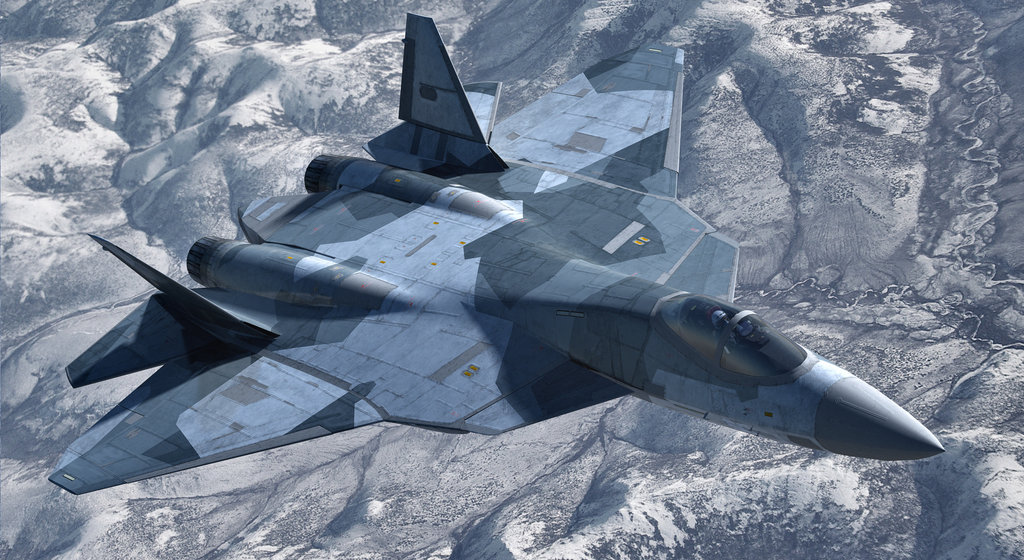 The Russian military delegation headed by Defense Minister Sergei Shoigu flew to Brazil. The visit to sunny Brazil is based on the subject of arms supplies. The Russian minister also plans to visit Peru to discuss and sign contracts for the supply of arms in the total amount of about $1,7 billion. In general, Russia is strengthening its position on the arms market in Latin America. In Brazil, Russian and Brazilian officials will sign the previously discussed contracts for the supply of Panzir-S1 air defense systems and individual complexes 9K38 Igla worth more than a billion dollars. Shoigu will have a meeting with Brazilian Defense Minister Celso Amorim, Chief of Staff José Carlos de Nardi and possibly President Dilma Rousseff. During the visit, Rosoboronexport intends to offer Brazil to buy Russian fighter jets Su-35, including the possible transfer of technology for their production. The Russian minister will also discuss collaboration on the development of fifth-generation fighter aircraft PAK FA T-50. The activity of the Russian side is based on Brazil’s move to suspend the implementation of the signed contract for the purchase of U.S. F-18 fighter jets worth about $ 4 billion. The move is based on Brazil’s dissatisfaction over America’s total surveillance of the Brazilian president, government and public companies. However, according to the Brazilian press, the problem is that it is impossible to re-include Russia in the tender for F-X2, since Sukhoi design bureau with the same aircraft dropped out of the tender in the first round. If this tender is closed and a new one opens for F-X3, it may cause damage to reputation and possibly trigger a diplomatic conflict, the Brazilian newspaper Estadão wrote. The F-X2 tender formally includes three rival aircraft: Rafale – by French company Dassault, F- 18 Super Hornet – by American Boeing and Gripen NG – by Sweden’s Saab. In 2008, the Brazilian Ministry of Defense refused from three participants: F -16 Fighting Falcon – by Lockheed-Martin, Eurofighter Typhoon – by Eurofighter consortium and from Su-35 – by Sukhoi of Russia. Russia, being inspired with Brazil’s move not to sign the contract with the Americans, now intends to sell its Su- aircraft, offering the joint development of next generation T-50 aircraft. This military aircraft, which will be the core of the future Russian fighter fleet, was created with the use of stealth technology, which reduces visibility in visual, audio, infrared and radio frequency spectrum. With the help of high-impact systems, it can penetrate into the areas of high risk. The plane is equipped with laser-guided weapons and a radar station with an active phased array antenna. According to the plans of the Russian government, the planes will start arriving in the Russian Air Force in 2016. Russia already has the experience of joint development of the T-50 with India. According to representatives of Indian company Hindustan Aeronautics Limited (HAL), which will be building the plane, the parties have completed the preliminary design of the aircraft, tentatively named FGFA. Negotiations are underway about its details. “Our proposals are of systemic and complex character,” Igor Korotchenko, chief editor of National Defense magazine told Pravda.Ru. “The air defense weapons systems that are being offered to Brazil, are very effective weapon, according to their performance characteristics, and we can assume, with high probability, that Brazil will sign the contract. As for the proposals for the joint production of the Su-35 and the development of the T-50, no one except Russia will make such a proposal to the Brazilians. No Western country will ever offer such a package of options with the transfer of technology. This means that the Russian Federation considers Brazil a strategic partner,” concluded Korochenko. In this context, the Brazilians could appoint a new tender for the purchase of fighter aircraft. Noteworthy, the air force of Brazil has Russian multi-purpose attack helicopters Mi-35, another batch of which was delivered to the country from Russia in August under the contract with Rosoboronexport. In addition, during the visit of President Dilma Rousseff last year, Russian Helicopters holding company signed the first export contract for the supply of seven Ka-62 helicopters to Brazilian company Atlas Táxi Aéreo. This transport helicopter won the tender of the Brazilian national oil company Petrobras. In the future, the fleet of these helicopters will only grow. The Russian delegation, which, in addition to Defense Minister Shoigu, includes Alexander Fomin, the head of the Federal Service for Military and Technical Cooperation, and Anatoly Isaikin, the head of Rosoboronexport, will also visit Peru before October 17. The delegation will meet with President Ollanta Humala and top military leaders of the country. Peru intends to buy from Russia 110 T-90S tanks and BTR-80A worth about $700 million, according to the Kommersant. “This is an important visit. Our Army and the Air Force initially appeared with the cooperation and logistical support from the former Soviet Union, and today – Russia,” said former defense minister and Congressman Daniel Mora. He stressed out the importance of Peru’s rearmament and co-operation with Russia in the field of advanced technologies, including space. Source Related Posts: |
|
Posted: 16 Oct 2013 10:34 AM PDT
 Republican and Democratic leaders in the US Senate are reportedly “very close” to announcing a deal on the nation’s borrowing authority that would avert an unprecedented default on US debt. Harry Reid and Mitch McConnell, the Senate majority and minority leaders held talks on Wednesday morning as the Thursday deadline on the debt limit is fast approaching. The US Treasury taps out its reserves Wednesday midnight and there is no deal yet in Washington to raise the nation’s $16.7 trillion debt limit. Lawmakers in the House of Representatives failed to produce a plan for ending the stalemate on Tuesday. That shifted the focus back on the Senate to forge an agreement acceptable to both parties, as the government slides into day 16 of the shutdown. Senate leaders said they were optimistic about an eleventh-hour agreement on Wednesday. “Given tonight’s events, the leaders have decided to work toward a solution that would reopen the government and prevent default,” Don Stewart, a spokesman for McConnell, said in a statement. “They are optimistic an agreement can be reached.” The Senate leaders’ last ditch effort was also given added urgency on Tuesday by a warning issued by the Fitch Ratings, the third largest credit rating agency, which put the US government on notice for a potential downgrade of the nation’s AAA credit worthiness. Standard & Poor’s downgraded the US credit rating to AA status in 2011 following similar bickering over the federal spending and debt limit. The emerging measure in the Senate would extend the borrowing authority through February, and include a spending bill to fund the government through January 15. The deal is likely to be announced by midday, when the Senate formally opens for business, aides said on Wednesday morning. The Senate measure should first get a House vote, and then the Senate must take up the bill for vote. After passage, it must be sent to President Barack Obama to be signed into law before the end of the day. Source Related Posts: |
|
Posted: 16 Oct 2013 10:29 AM PDT
 Typhoon Wipha shot through Tokyo and up Japan’s Pacific coastline early Wednesday, killing at least 17 people. Thousands were advised to evacuate, although no major damage was reported. The storm, with sustained winds of 126 kph (78 mph) at its center, was marked by hurricane-level winds and rain that soaked the city’s morning rush hour, leading to disrupted flights, train services, and school activities. Thirteen bodies were found by rescue workers on Izu Oshima Island, located 120km south of Tokyo, according to NHK television. Most of the dead were swept up in mudslides, the Associated Press reported. Over 40 people were unaccounted for and dozens of houses were destroyed on the island, officials said, according to the AP. Though pre-storm speculation billed Wipha as a landmark, once-in-a-decade typhoon, there were no reports of significant damage around Tokyo. However, evacuation advisories were issued to thousands around the capital area. Workers at the Fukushima nuclear power plant north of the city had to pump rainwater out of protective containers surrounding approximately 1,000 tanks holding radioactive water. The rainwater will be stored in an empty tank, measured for radioactivity, and released into the sea if not contaminated, according to the plant’s operator, Tokyo Electric Power Company (TEPCO). The area surrounding the plant could receive more inclement weather later on Wednesday, Reuters reported. TEPCO stressed before the storm hit that it was preparing for the disaster following the recent leaks of radiation-polluted water from the facility. “We are making preparations for proper management of contaminated water… We will patrol places that could have inflows of water (from the storm),” a company spokesman told AFP. Cables and hoses were bundled together, while ground and off-shore works have been halted, he also pointed out. Earlier this month, TEPCO announced 430 liters of polluted water had spilled from a tank as the company’s employees tried to remove rainwater dumped at the plant by recent typhoons. The contaminated water may well have flowed into the sea, TEPCO said. Meanwhile, 450 flights were canceled across Japan in measures ahead of the typhoon’s landing. The combined cancellations will affect 60,850 passengers, Japan Airlines Co said. East Japan Railway Co said it had canceled 31 bullet trains going north and west from Tokyo, Reuters reported. “Wipha will remain a strong and expansive extra-tropical system as it tracks along the eastern coast of Japan,” the US-based Joint Typhoon Warning Center reported on its website ahead of the storm. Source Related Posts: |

